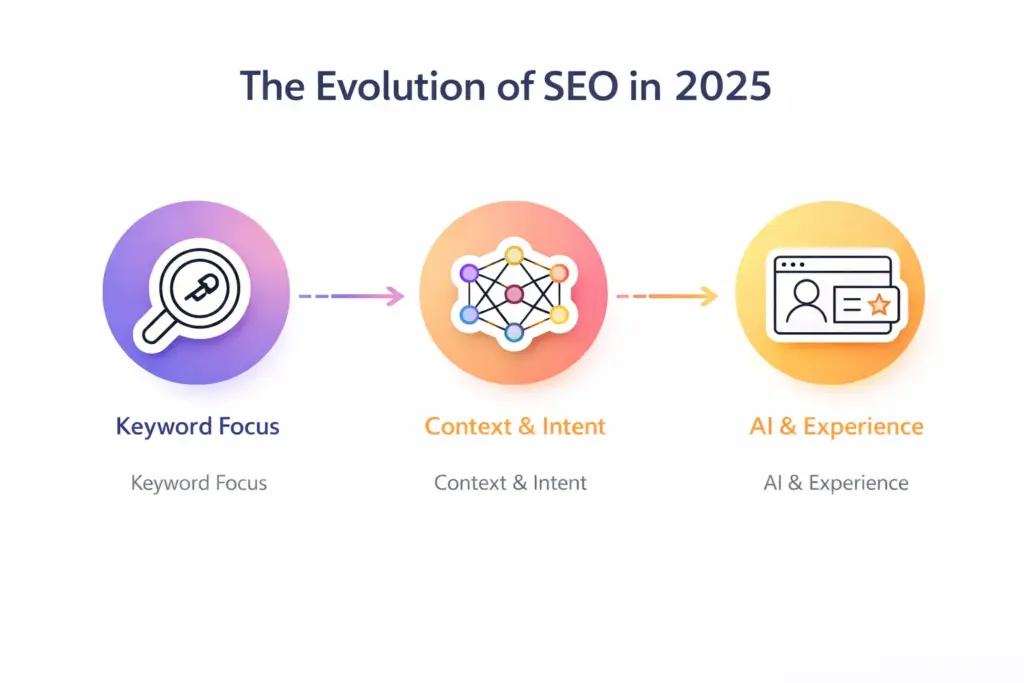
The truth is, SEO isn’t as simple as it used to be. You can’t just plug in a few keywords and call it a day. We’re dealing with a much more intelligent system now, and staying visible requires a whole new level of effort.
So, you’ve probably seen acronyms like GEO, LLM SEO, AEO, and SXO popping up everywhere. If you’re wondering what they actually mean for you, you’re exactly where you need to be.
We’re about to unpack these one by one, and don’t worry, we’ll keep things human, practical, and real!
Before we dive into the newer models, let’s take a moment to reflect. How did we even get here?
Just when we thought we had SEO all figured out, the goalposts moved again. We’re heading into 2026 with a brand new playbook, so let’s talk about what actually matters for your ranking right now
Let’s start with a truth bomb: Keywords alone won’t cut it anymore.
Back in the day, if you packed enough of the right words into a blog post, Google might reward you.
But now? Search engines have evolved to read between the lines, literally. They care about context, relevance, and intent!
Let’s say someone searches for “best laptops for students.” They’re not just looking for a list; they want battery life, price comparisons, durability, and maybe even a student discount.
Have you thought about what your content is really answering?
If you’re still optimizing just for surface-level terms, your content might be invisible in today’s SERPs. So what should you do?
Your content should read like it’s answering a real person’s question, not a robot’s.
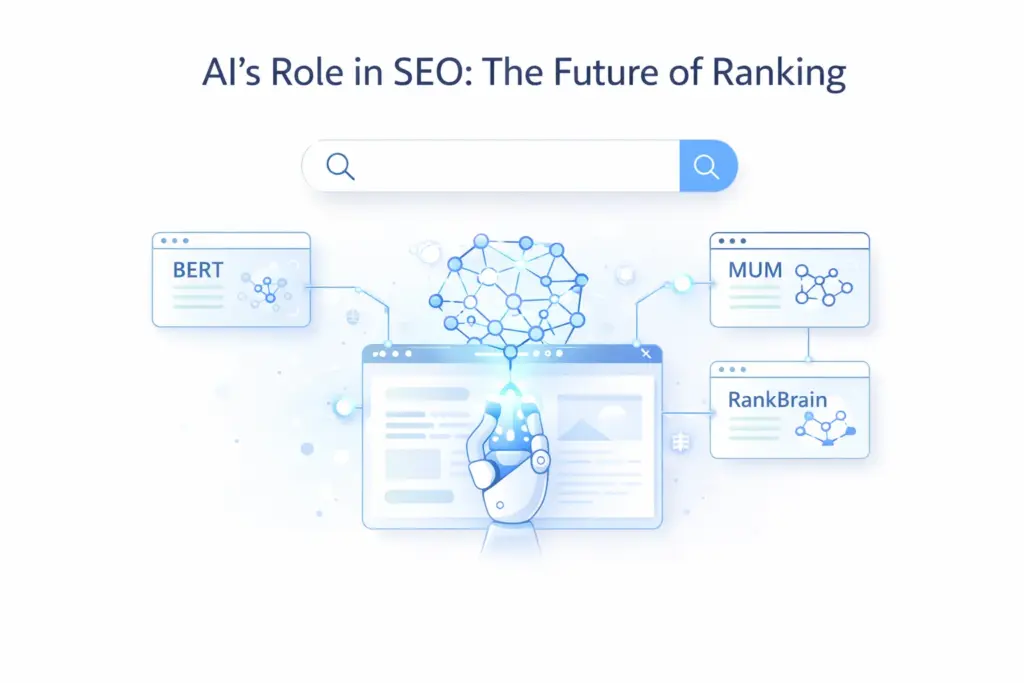
Here’s where things get interesting. AI has gone from an SEO buzzword to the brain behind nearly every major ranking system.
Google’s algorithms, such as BERT, MUM, and RankBrain, don’t just scan text. They interpret language the way humans do. That means nuance, tone, and even emotion can influence ranking.
Don’t you feel like Google now “just gets you”? That’s AI at work!
But here’s the real plot twist! If you write like a robot, search engines will treat you like one. With all the ‘noise’ out there as we head into 2026, your best bet is just to be human!
Focus on being helpful and easy to understand. Write for the actual person reading this, not just to move a needle!
Now let me ask you something: When was the last time you typed a question word-for-word into a search bar?
Chances are, you used voice search while multitasking or tapped an image to find similar products. That’s today’s reality.
Here’s the deal:
If your website takes forever to load or your images lack proper alt text, then how helpful is that to someone searching on the go?
Now let’s talk about GEO, and no, this isn’t just another acronym to ignore.
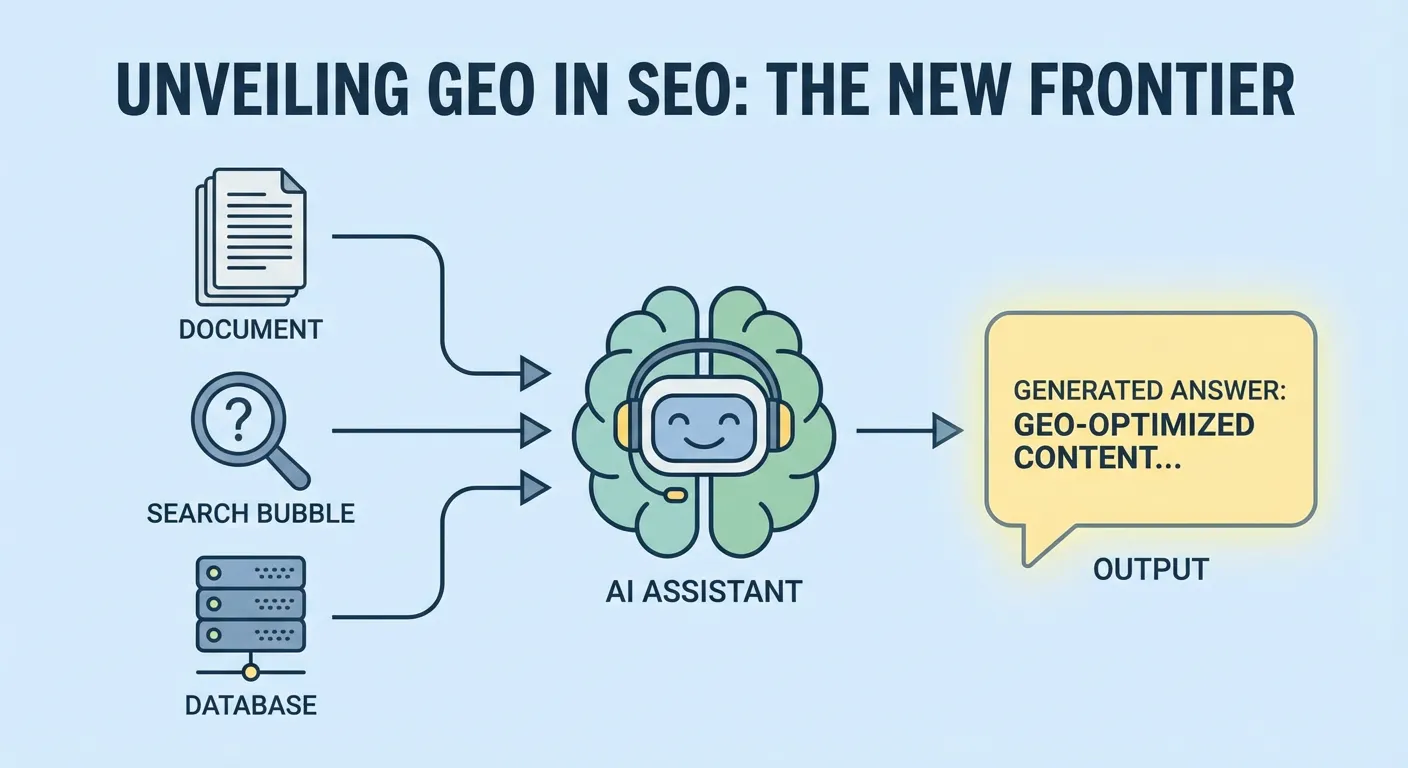
GEO (Generative Engine Optimization) is the new way to get noticed. Instead of just trying to rank a link on a page, you’re trying to get tools like ChatGPT and Perplexity to pick you as their primary source.
If regular SEO is about getting a link to show up, GEO is about becoming the source that the AI actually quotes!
Notice how AI tools give a complete answer without showing ten blue links?
That info is pulled from real sources, and GEO is how you make sure it’s your content they pick up.
Generative engines work differently from classic search engines. They analyze large amounts of content and then generate new responses based on patterns, authority and clarity.
GEO focuses on helping AI systems:
Instead of asking “How do I rank for this keyword?” GEO asks, “How do I become the best possible explanation of this topic?”
You do not need a complex system to apply GEO. You need clarity and structure.
Strong GEO-aligned content typically includes:
A simple test works well. Ask whether an AI could summarize your section without changing its meaning. If the answer is yes, your content is GEO ready!
Let’s shift gears. You’ve probably used tools like ChatGPT or Perplexity lately, right?
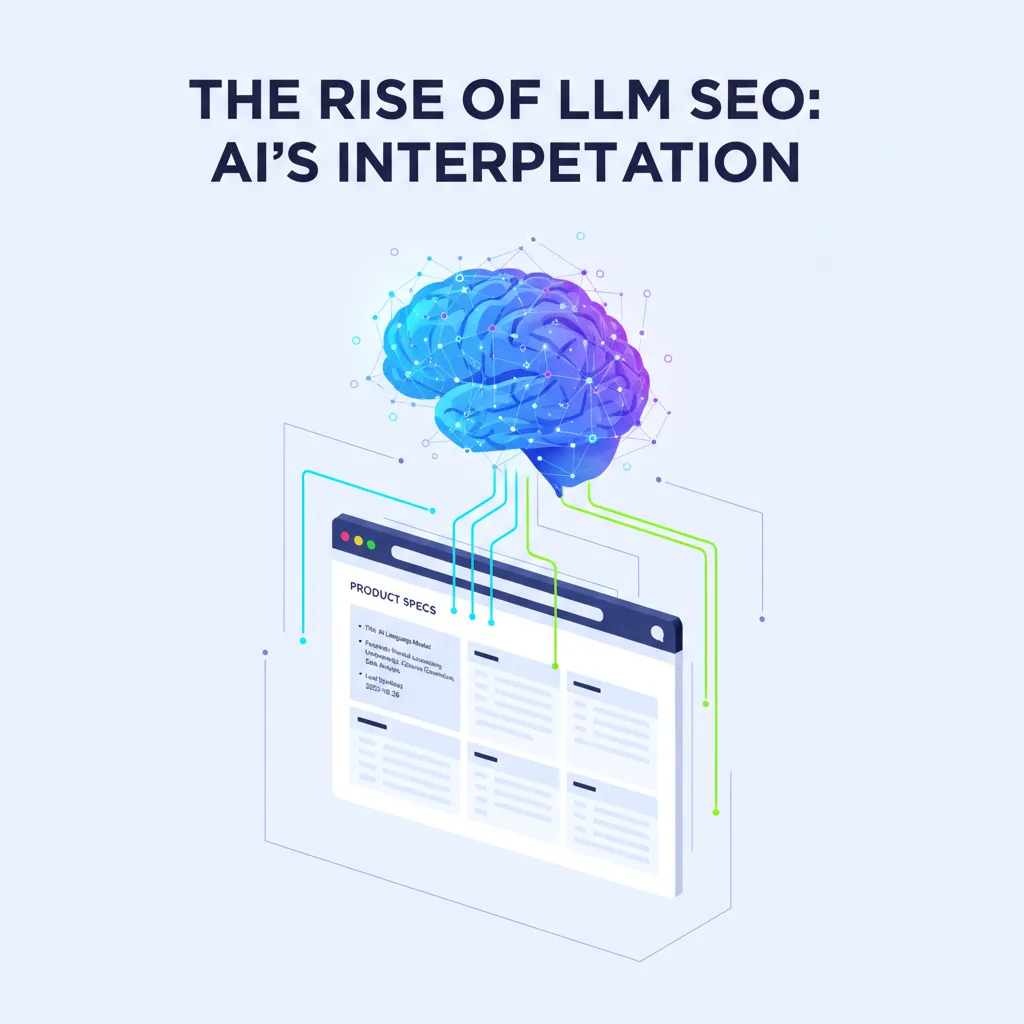
These AI models are starting to take over for traditional search engines, and that’s precisely what LLM SEO is all about.
LLM SEO (Large Language Model SEO) is about crafting content that AI models can understand, summarize, and recommend.
Why should you care?
Because platforms powered by LLMs are already answering millions of questions daily, without sending users to your website. Unless your content is structured correctly, you’ll miss out on this massive traffic.
Think of it this way:
LLMs don’t just scan for keywords. They look for patterns. They “read” your content like a human would, and they reject fluff, vagueness, or overly salesy content.
What they do love:
Basically, if your content sounds like it’s written by someone who knows their stuff and cares about helping the reader, you’ve already won!
Quick tip? Treat every article like it could be the basis for someone else’s answer.
Ready to level up? Here’s what you can do right now to win at LLM SEO:
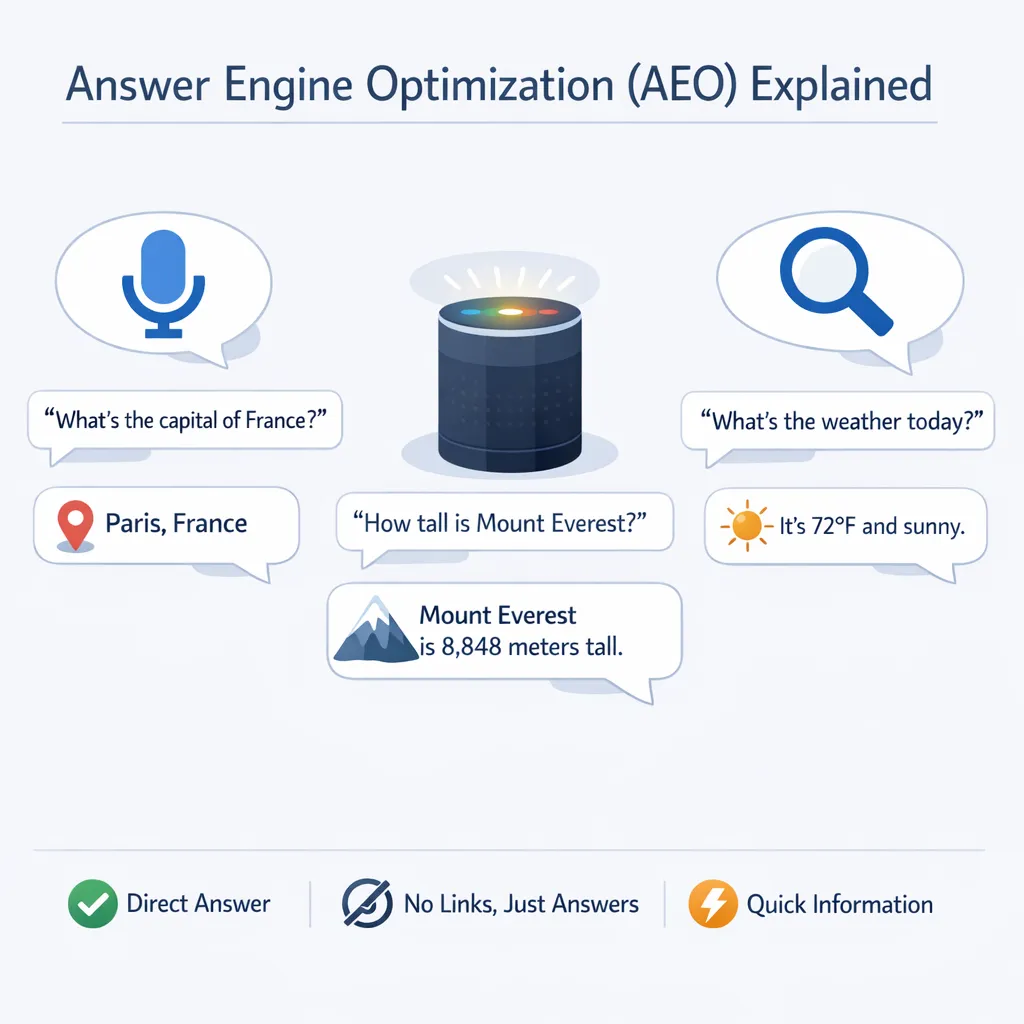
Now that we’ve covered LLM SEO, let’s take a look at something closely related but slightly different: AEO, or Answer Engine Optimization.
Have you ever noticed how you get direct answers at the top of Google now? Or how tools like Siri and Alexa just tell you the answer instead of giving you a list of links?
That’s AEO at work. And if your content isn’t ready to be the answer, someone else’s will be.
Nowadays, people want answers fast. Nobody wants to scroll through pages when the answer is right there at the top.
This is why ‘zero-click searches‘ are blowing up, where people get what they need without even clicking a link.
It sounds a bit scary, but if you’re ready for AEO, you’ll be the one everyone trusts!
Think about these examples:
All of these come from content crafted with answer intent in mind.
You might be wondering, “How do I get my content chosen for these answers?”
Here’s a quick guide for you:
Want to stand out? Answer one specific question completely in fewer than 50 words, then expand.
Here’s a pro tip: don’t just write FAQs, mark them up with schema.
This tells search engines, “Hey, this is a direct answer to a real user question.” That extra signal can land you in rich results or even voice assistant replies.
Use tools like:
Bonus: Structured data also improves visibility in AI-powered answers. So you’re not just optimizing for today, you’re getting ahead of tomorrow.
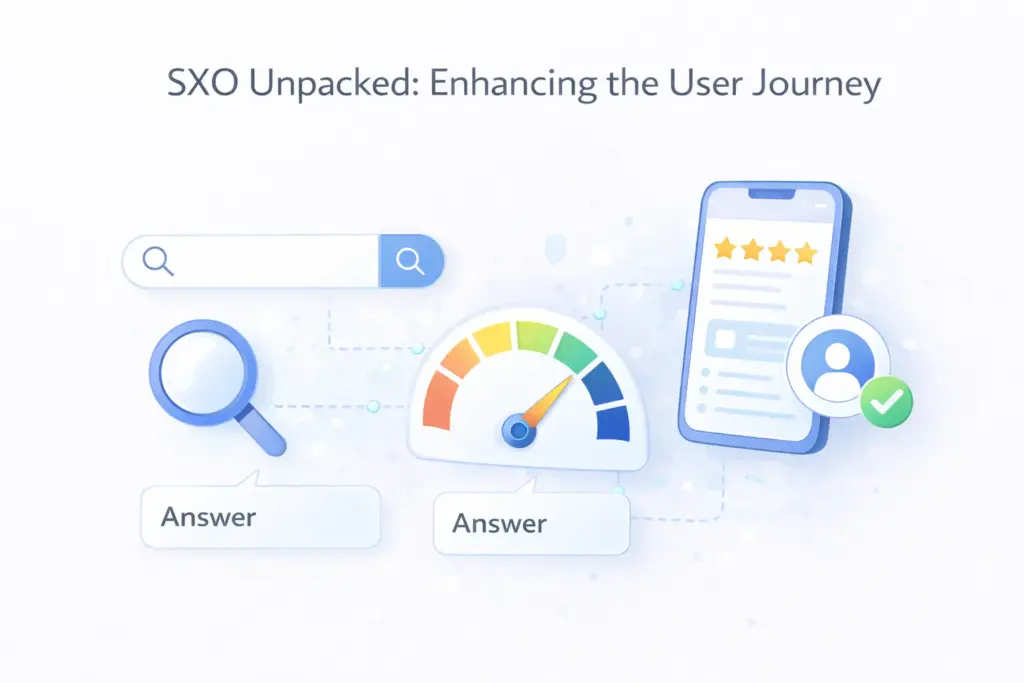
So far, we’ve talked about targeting search engines and AI. But what about real people, the ones actually reading your content?
SXO, or Search Experience Optimization, is where SEO meets User Experience.
It’s all about making sure that once people find you, they actually want to stay! Because there is no point in ranking first if your site loads slowly, looks outdated, or confuses people!
You’ve probably heard the term “user experience” before. But did you know Google actually ranks you based on it?
Yep. Since Core Web Vitals became part of Google’s algorithm, things like loading speed, interactivity, and visual stability affect your rankings.
Google wants to serve up the best experience—not just the best keywords. Things you should look into while optimizing your website:
If users bounce from your site fast, Google sees that as a bad sign. So if you want to stay on top, your website needs to feel fast, clean, and friendly.
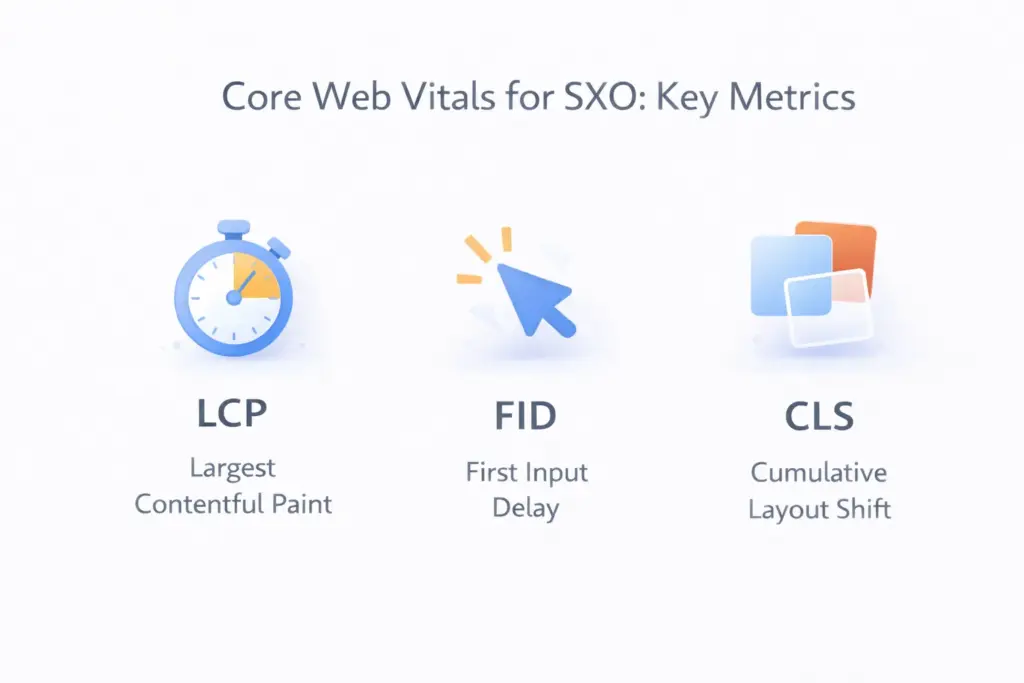
Let’s break down the Core Web Vitals, which are at the heart of SXO:
| Metric | What it Measures | Ideal Score |
| LCP (Largest Contentful Paint) | Loading performance | Under 2.5 seconds |
| FID (First Input Delay) | Interactivity | Less than 100 ms |
| CLS (Cumulative Layout Shift) | Visual stability | Less than 0.1 |
Now, don’t worry—you don’t need to be a developer to improve these. Tools like Google PageSpeed Insights and GTmetrix will tell you exactly what’s wrong.
Small changes like compressing images, reducing third-party scripts, or using lazy loading can make a huge difference.
Want a site that delights users and pleases search engines? Here are some SXO strategies that work:
You’ve made it this far—great work. Now let’s pull it all together.
Each of these SEO models focuses on a different part of the search journey. But they don’t compete—they complement each other.
Let’s see how they stack up:
| SEO Model | Primary Focus | Who It Optimizes For | Main Outcome |
| GEO | Generative Engine Optimization | AI-generated answer systems | Content reused and cited in AI responses |
| LLM SEO | Large language model understanding | Language models and AI readers | Clear, accurate content interpretation |
| AEO | Answer Engine Optimization | Search and voice assistants | Featured snippets and direct answers |
| SXO | Search Experience Optimization | Human users | Engagement, trust and conversions |
Here is how they connect in real terms:
You might be thinking, “Where do I even start?”
Ask yourself these questions:
Still not sure? Start small. Pick one area to improve this month. Then layer in the others.
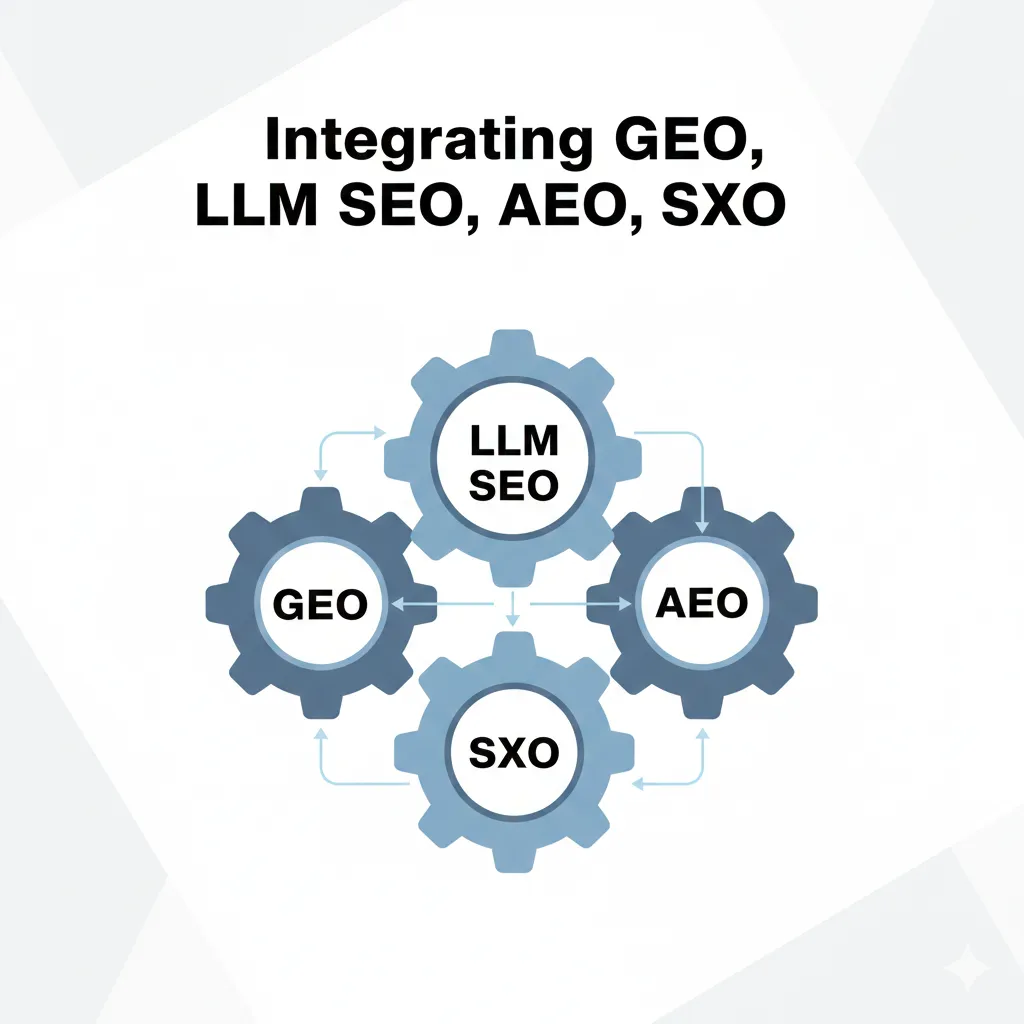
Okay, now that we’ve gone over GEO, LLM SEO, AEO, and SXO, you’re probably wondering, how do you actually pull all of this together?
Most people overthink it or just focus on one thing. But honestly? The best sites blend all four into a single SEO strategy.
Let’s talk about how to build that kind of system.
You don’t need to do everything at once. A phased approach works better—and keeps your sanity intact.
Step 1: Audit what you already have
Step 2: Prioritize based on goals
Step 3: Create a 90-day action plan
Break tasks into weekly or monthly pieces. For example:
SEO doesn’t have to be overwhelming—it just needs consistency.
How do you know if it’s working? You track the right things. Here’s what to monitor for each type of SEO:
Use tools like Google Search Console, Ahrefs, Screaming Frog, and Hotjar to gather real insights.
And remember, not everything is about rankings. Sometimes the win is increased trust, better leads, or more efficient customer support.
Quick reality check—most people mess up SEO by focusing too narrowly. Here are a few traps to watch for:
Avoid these, and you’re already ahead of most of your competitors.
No one does SEO in a vacuum. The right tools can multiply your results—and save you from hours of guesswork.
Here’s a toolkit broken down by strategy:
Pro Tip: Periodically test your key pages by asking AI tools to summarize them. If the output is accurate and aligned with your message, your GEO foundation is strong.
Want to test your content? Drop it into ChatGPT and see if it pulls clear takeaways. If not, it’s time for some rewrites.
Minor fixes, like image compression or simplifying your navigation, can have a big impact, especially for mobile users.
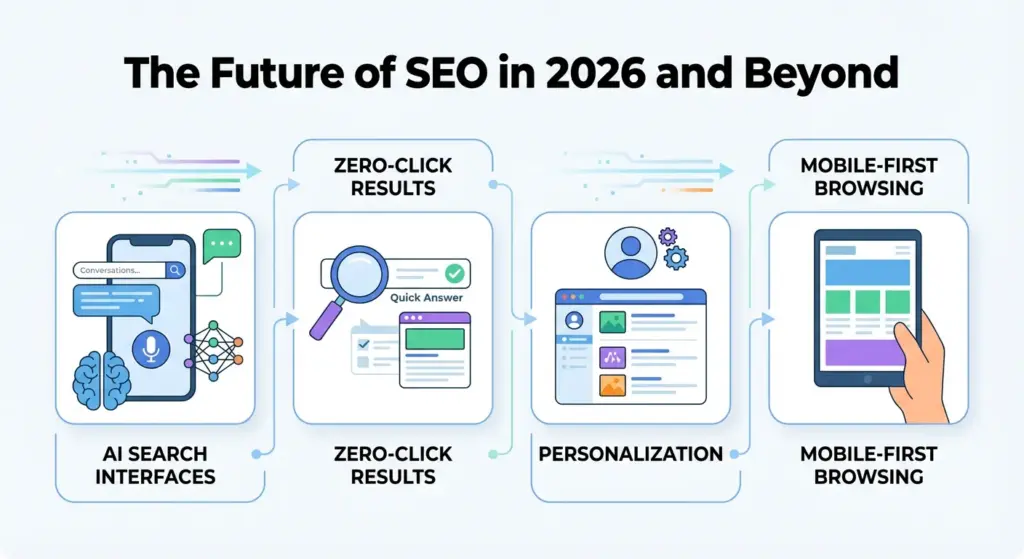
You’ve heard it before: SEO is constantly changing. But now, it’s changing faster than ever.
What can we expect in the next year or two? Here’s a peek into the future.
The takeaway? You need to think beyond Google. SEO in 2026 will be multi-platform, multi-format, and multi-intent.
Google might drop 10 updates next year; we never really know. But you can protect yourself with this mindset:
If you optimize for people first, the algorithms tend to follow.
SEO has grown up. What started as a game of keywords and backlinks is now a sophisticated blend of location targeting, AI optimization, direct answers, and user experience.
GEO, LLM SEO, AEO, and SXO aren’t just new trends—they’re pillars of a successful digital strategy in 2025 and beyond.
You don’t need to master them all overnight. Start with one. Build from there. And above all, keep asking the right questions, just like your audience does.
Because at the heart of all good SEO is one thing: helping real people find real solutions.
1. What does GEO mean in SEO?
GEO SEO refers to optimizing content for location-based search queries. It ensures your content or business appears when people search near your geographical area.
2. How do LLMs affect SEO strategy?
Large Language Models interpret content the way humans do. Optimizing for them (LLM SEO) means writing clearly, using a structured approach, and offering practical, fact-based information.
3. Is AEO more important than traditional SEO?
It depends on your goals. AEO helps with zero-click and voice search, while traditional SEO builds long-term visibility. Ideally, use both.
4. What tools help with SXO?
Tools like Google PageSpeed Insights, Hotjar, and Lighthouse can help you analyze and improve the user experience on your website.
5. Can these SEO strategies be combined?
Absolutely. In fact, combining them creates a stronger, more future-proof strategy that meets the needs of users and search engines alike.
6. Is LLM SEO only for AI platforms like ChatGPT?
No. LLM SEO benefits any platform using natural language processing, including Google’s newer AI-driven features and voice assistants.
7. How does GEO help with local SEO?
GEO SEO makes sure you show up in local search results, which drives more nearby users to your website or store.
8. What are Core Web Vitals in SXO?
They’re key UX metrics—loading speed, interactivity, and visual stability—that impact your Google rankings.
9. How can I optimize my site for voice search?
Use conversational keywords, answer questions clearly, and structure your content with proper headings and schema.
10. Do these strategies work for all industries?
Yes. Whether you’re B2B, B2C, local, or global, applying GEO, LLM SEO, AEO, and SXO makes your content more relevant and discoverable.